
Stop Borrowing Your Neighbors Hammer with These 15 Essential Tools
Why Every Homeowner Needs These 15 Essential Tools
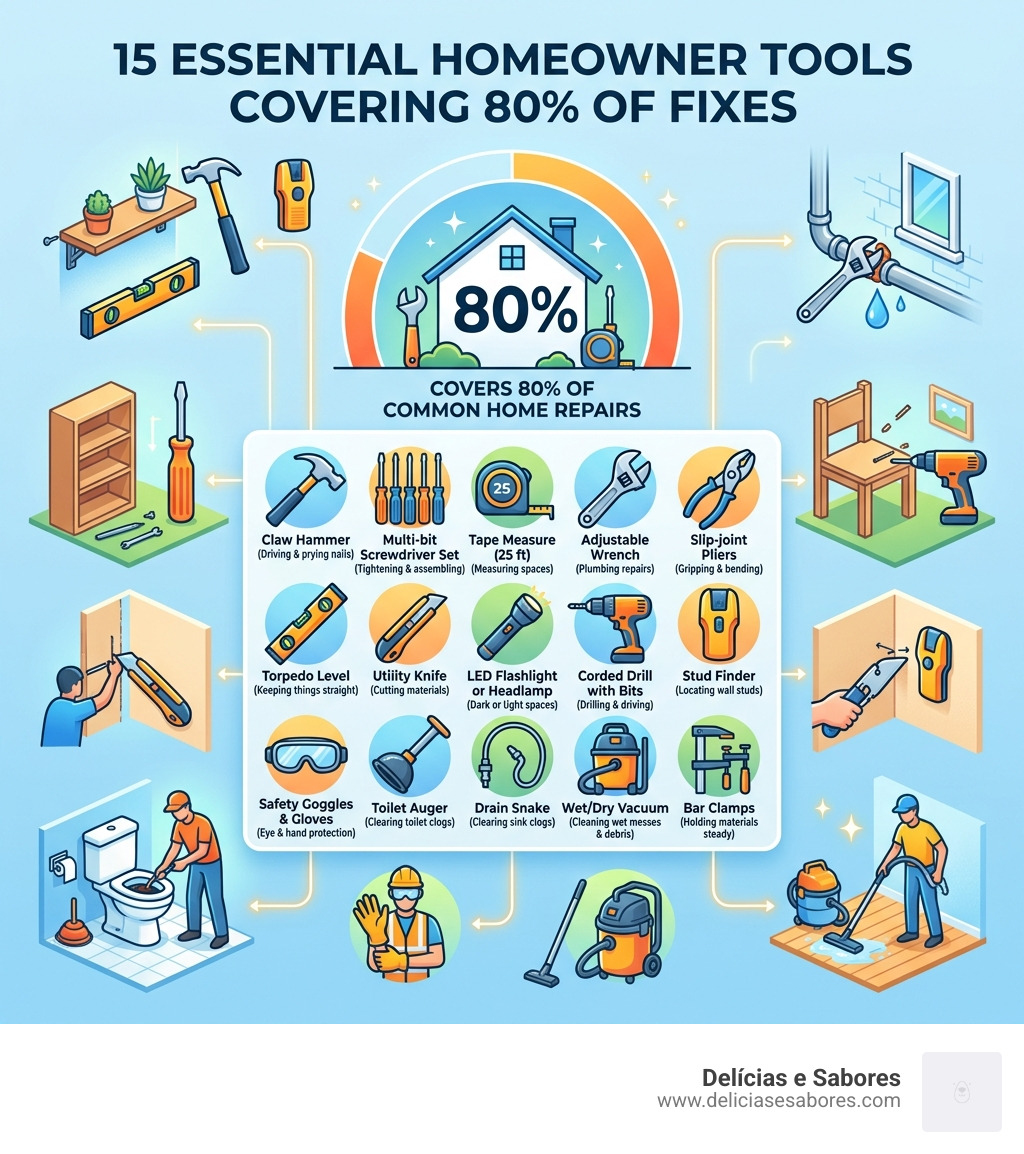
The 15 tools every homeowner should have are:
- Claw hammer – hanging, prying, and driving nails
- Multi-bit screwdriver set – tightening hinges, assembling furniture
- Tape measure (25 ft) – measuring spaces and projects
- Adjustable wrench – plumbing repairs and loose bolts
- Slip-joint pliers – gripping, bending, and pulling
- Torpedo level – keeping shelves and frames straight
- Utility knife – cutting, trimming, and opening materials
- LED flashlight or headlamp – working in dark or tight spaces
- Corded drill with bits – drilling holes and driving screws fast
- Stud finder – locating studs before drilling into walls
- Safety goggles and work gloves – protecting eyes and hands
- Toilet auger – clearing stubborn toilet clogs without a plumber
- Drain snake – clearing sink and pipe clogs
- Wet/dry vacuum – cleaning up debris and wet messes
- Bar clamps – holding materials steady while you work
Making the jump from renting to owning a home is exciting. But it comes with a reality check pretty fast.
Suddenly, you’re the one fixing the clogged toilet. You’re hanging the shelves. You’re tightening the loose cabinet hinge before guests arrive.
Here’s the thing: you don’t need a truck full of gear to handle most of it. A focused set of quality basics covers around 80% of the everyday fixes a home throws at you. And every repair you handle yourself is money you keep in your pocket — skilled tradespeople charge upwards of $60 an hour, with a two-hour minimum on most service calls.
One homeowner paid $130 for a plumber who unclogged a toilet in 90 seconds using a $30 tool. That tool is on this list.
Whether you just got the keys or you’ve owned your place for years without a proper toolkit, this guide will show you exactly what to buy, what to skip, and how to get set up without wasting money.
The Ultimate Checklist: 15 Tools Every Homeowner Should Have
Building a toolkit is like building a pantry; you want the staples that allow you to whip up a solution at a moment’s notice. In April 2026, with the cost of service calls rising, being self-reliant isn’t just a hobby—it’s a financial strategy. We have found that most homeowners overbuy low-quality “mega-kits” filled with 200 pieces they never use. Instead, we advocate for a “quality over quantity” approach.
1. The 16-Ounce Claw Hammer
A 16-ounce hammer is the “Goldilocks” of the tool world—not too heavy for hanging pictures, but beefy enough to pull up a floorboard. Look for one with a rip claw (the flatter back) which is better for prying things apart than a curved claw. A grippy, shock-absorbing handle will save your wrists during longer projects.
2. Multi-Bit Screwdriver Set
Space is at a premium in most modern homes. A high-quality multi-bit screwdriver (often labeled as a 12-in-1 or 16-in-1) is often a better choice than separate drivers. It ensures you always have the right Phillips or flathead bit for tightening hinges or assembling that new flat-pack bookshelf. Ensure the tips are slightly magnetized to prevent the “where did that screw go?” frustration.
3. The 25-Foot Tape Measure
Precision is the foundation of any successful project. We recommend a 25-foot locking tape measure. It’s long enough to measure a whole room but compact enough for your pocket. Look for one with an “auto-lock” feature; it stays extended until you hit the button, preventing those accidental finger-snaps. For more on the basics, check out these Homeowner Essentials – Tools Everyone Should Own.
4. Slip-Joint Pliers
These are the most versatile pliers you can own. The adjustable pivot point allows the jaws to open wider for larger nuts or grip tightly on small wires. They are perfect for bending metal, pulling out stubborn nails, or gripping a hot radiator valve.
5. Adjustable Wrench (Crescent Wrench)
Plumbing emergencies don’t wait for business hours. An 8-inch or 10-inch adjustable wrench allows you to tighten a leaking faucet at midnight. Pro tip: always pull the wrench toward you rather than pushing it; if it slips, you won’t bark your knuckles against the wall.
6. Torpedo Level
Nothing ruins a room’s vibe like a crooked picture frame. A small torpedo level fits in a kitchen drawer and ensures your shelves are perfectly horizontal. In DIY, “close enough” isn’t good enough—the bubble must be exactly in the middle.
7. Utility Knife
From opening heavy boxes to trimming a piece of carpet or stripping a wire, a retractable utility knife is essential. Always keep spare blades on hand; a dull blade is actually more dangerous because it requires more force, increasing the chance of a slip.
8. LED Flashlight or Headlamp
Most home repairs happen in dark corners—under the sink, in the attic, or during a power outage. A hands-free headlamp is a game-changer when you need both hands to navigate a maze of pipes or wires.
Must-Have Power: Why the Drill Tops the 15 Tools Every Homeowner Should Have
If there is one power tool we believe every homeowner should own, it is a drill. However, we have a unique take: consider a corded drill.
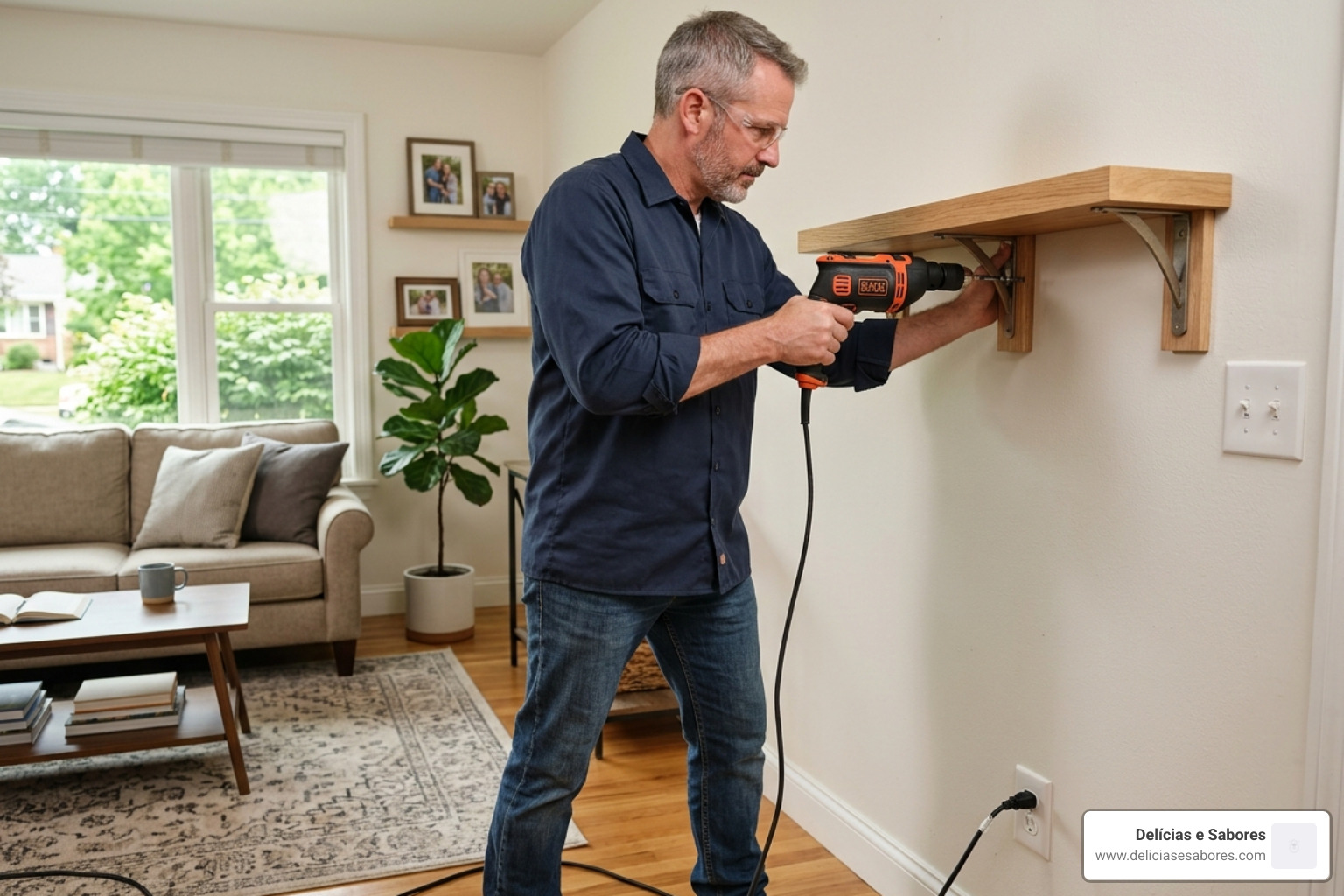
While cordless drills are popular, they can be a bit of a trap for the casual DIYer. Batteries for cordless drills often fail after a few years of sitting in a drawer, and replacements can cost more than the tool itself. A 7-amp corded drill provides consistent, high-torque power every time you plug it in. It’s always ready, never needs charging, and won’t die halfway through mounting a heavy TV bracket.
When choosing bits, look for a set that includes:
- Standard twist bits for wood and metal.
- Masonry bits if you have brick or stone walls.
- Countersink bits to hide screw heads flush with the surface.
Plumbing and Precision: Rounding Out the 15 Tools Every Homeowner Should Have
10. Stud Finder
Don’t guess where the wood is. A stud finder prevents disasters like drilling into a PVC pipe or a live electrical wire. In older homes, look for a model that can handle deeper scans through plaster.
11. Safety Goggles and Work Gloves
Safety is not “optional equipment”—it’s foundational. Even a simple task like hammering a nail can send a chip of paint or metal flying toward your eye. “Sorry doesn’t bring back an eye,” as the experts say. Gloves protect you from splinters and blisters, allowing you to work longer and more comfortably.
12. Toilet Auger
This is the $30 tool that saves you a $130 plumbing bill. Unlike a standard plunger, an auger (or “closet auger”) has a long cable that snakes through the toilet’s trap to break up stubborn clogs. It is the single best investment for preventing “midnight panic” calls to a pro.
13. Drain Snake
For sinks and showers, a hand-cranked drain snake is your best friend. It reaches deep into pipes to pull out hair clogs and soap scum that chemical cleaners can’t touch.
14. Wet/Dry Vacuum
A shop vac, like a 4-gallon Ridgid model, can handle things your household vacuum can’t—like spilled water, sawdust, or broken glass. It’s a lifesaver when a pipe leaks or a DIY project gets messy. For more on building a smart kit, see The Essential Home Tool Kit: 15 Smart Tools Every Homeowner Actually Needs.
15. Bar Clamps
Think of clamps as your “third hand.” Whether you are gluing a broken chair leg or holding a board steady while you saw it, bar clamps ensure your work stays put. You can never have too many clamps!
Smart Buying Strategies: Quality, Cost, and Avoiding Fakes
When shopping for the 15 tools every homeowner should have, we suggest a budget of $200 to $500 for a complete, high-quality set. While it’s tempting to grab the cheapest option at a discount store, quality tools last a lifetime. Cheap tools often have “soft” metal that strips screws or handles that snap under pressure.
Watch out for counterfeits. In the age of online marketplaces, fake power tools and blades are a real danger. They may look like a famous brand, but they lack the safety testing and internal components of the real deal. Always buy from reputable national retailers to ensure you’re getting genuine, warrantied items.
When to Buy, Borrow, or Rent
| Tool Type | Buy | Borrow | Rent |
|---|---|---|---|
| The 15 Essentials | Yes, these are used monthly. | No, you need them on hand. | No, not cost-effective. |
| Specialty (Tile Saw, Auger) | If you have frequent issues. | Yes, for one-off projects. | Yes, for high-end versions. |
| Heavy Equipment (Floor Sander) | Never. | No, too much liability. | Yes, always rent these. |
Prioritizing Your Purchases
If you can’t buy all 15 at once, start with the “Big Three”: a hammer, a multi-bit screwdriver, and a tape measure. These three alone solve about 50% of first-week homeowner problems. Avoid the “pink” mini-tool kits; they are often low-quality novelties. You want tools that can handle real work.
Maintenance, Storage, and Safety Non-Negotiables
Your tools are an investment, and they need care—especially if you live in a humid climate. Moisture is the enemy of steel.
Tool Storage in Small Spaces
If you live in a condo or apartment, you don’t need a massive workbench. A dedicated tool bag with reinforced handles and plenty of pockets is perfect. It keeps everything organized and can be tucked away in a closet. For those with a garage, a wall-mounted pegboard is the gold standard for keeping tools off the floor and away from damp concrete.
Rust Prevention and Care
- Wipe them down: After use, wipe metal parts with a rag and a light coat of household oil (like 3-in-1 oil).
- Desiccant packs: Toss a few silica gel packs into your toolbox to soak up excess humidity.
- Check your blades: Replace utility knife blades and drill bits as soon as they become dull.
Non-Negotiable Safety Gear and Precautions
Beyond goggles and gloves, we recommend a non-contact voltage tester. This small pen-like tool glows when it’s near live electricity. Before you swap a light fixture or even tighten a loose outlet, use it to verify the power is truly off.
When using a ladder, follow the “1-to-4” rule: for every four feet of height, the base of the ladder should be one foot away from the wall. For a deeper dive into safety and emergency prep, read about Essential Tools for Maintenance and Emergencies.
Frequently Asked Questions about Homeowner Toolkits
Why should I choose a corded drill over a cordless one?
As we mentioned, corded drills offer “forever power.” For the average homeowner who might only use a drill once every three months, a cordless drill’s battery will likely be dead when you need it most. Corded drills are also lighter (no heavy battery pack) and usually cheaper for the same amount of torque.
What are the best tips for using tools in older homes?
Older homes often have plaster and lath walls rather than modern drywall. Standard stud finders can struggle with this. We suggest using a magnetic stud finder to locate the nails in the lath. Also, be prepared for “surprises” behind the walls—always drill pilot holes slowly to ensure you aren’t hitting old iron pipes or knob-and-tube wiring.
What common beginner mistakes should I avoid?
- Stripping screws: This happens when you use the wrong size screwdriver bit or apply too little pressure. Make sure the bit fits the screw head snugly.
- Over-tightening bolts: Especially in plumbing, “tighter” isn’t always “better.” Over-tightening can crack porcelain or crush rubber gaskets, causing a bigger leak than you started with.
- Rushing: Most DIY accidents happen when you’re in a hurry. Take the time to measure twice and set up your safety gear.
Conclusion
At Delícias e Sabores, we believe that property care should be as satisfying as a well-cooked meal. Equipping yourself with the 15 tools every homeowner should have is the first step toward transforming your house into a home you can maintain with pride.
By handling small repairs yourself, you’re not just saving money—you’re building the confidence to take on larger upgrades that increase your property’s value. Whether you’re fixing a squeaky floorboard or hanging a gallery wall, having the right tools makes the difference between a frustrating afternoon and a job well done.
Ready to take your home maintenance to the next level? Explore our More info about property care services for expert advice on restoration, cleaning, and professional upgrades. Happy fixing!
