
How to Choose Your First Soldering Kit Without Melting Your Brain
Why Choosing the Right Soldering Kit for Beginners Actually Matters
Soldering kits for beginners are starter sets that give you everything you need to learn how to join electronic components using melted metal — no prior experience required.
Quick answer: What should a beginner soldering kit include?
- A temperature-controlled soldering iron (ideally 80W, adjustable 180–500°C)
- Rosin-core solder (60/40 or 63/37, around 0.8mm diameter)
- A soldering stand and cleaning sponge or brass wire wool
- Flush cutters and ESD tweezers
- Safety glasses
- A simple beginner project (like a through-hole PCB kit)
- Step-by-step instructions or access to video tutorials
Picking up a soldering iron for the first time can feel overwhelming. There are dozens of kits at wildly different price points — from under $12 to over $90 — and it’s not obvious what separates a frustrating experience from a satisfying one.
The truth is, the right kit makes all the difference. A poorly matched iron or the wrong type of solder can turn a 30-minute project into a burnt mess. But with the right setup, most beginners can complete their first working circuit in under an hour.
This guide cuts through the noise and shows you exactly what to look for.
What is a Beginner Soldering Kit and Why Do You Need One?
At its core, a beginner soldering kit is a curated “classroom in a box.” It bridges the gap between having a drawer full of loose electronic parts and actually knowing how to make them talk to each other. We find that for most newcomers, the biggest hurdle isn’t the manual dexterity—it’s the intimidation of not knowing which tool does what.
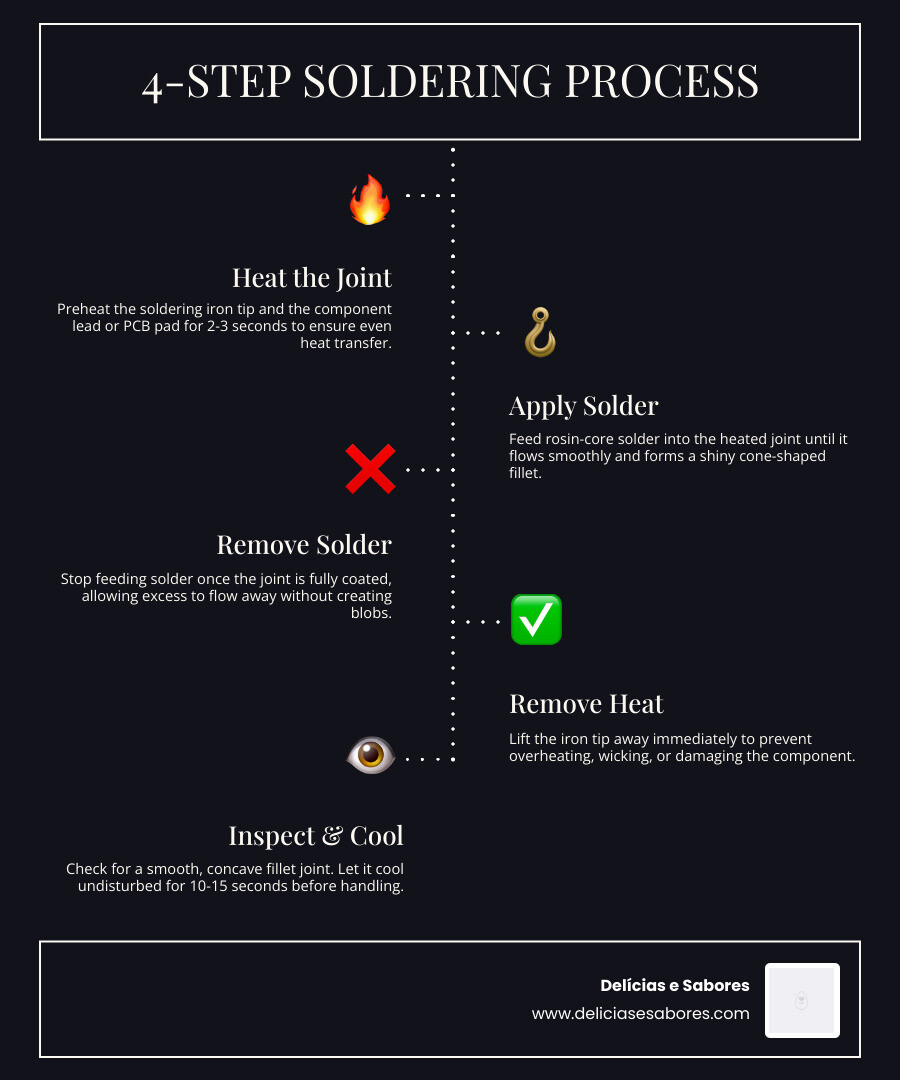
Most soldering kits for beginners focus on through-hole components. These are parts with long metal “legs” (leads) that push through holes in a Printed Circuit Board (PCB). Because these parts are larger and easier to handle than the microscopic components found in your smartphone, they are perfect for developing muscle memory.
Why Start with a Kit Instead of Buying Tools Separately?
When we look at the needs of a first-time maker, the “all-in-one” approach wins every time. A dedicated kit ensures that the wattage of the iron matches the melting point of the included solder, and that the PCB is resilient enough to handle a few “oops” moments.
| Feature | Standalone Iron | All-in-One Kit |
|---|---|---|
| Cost | Can be cheaper initially but adds up | Higher upfront, better long-term value |
| Project Included | No (must buy separately) | Yes (usually 1-4 projects) |
| Compatibility | You must match solder/tips yourself | Everything is pre-matched for success |
| Learning Curve | High (requires research) | Low (step-by-step instructions) |
The beauty of these kits is the interactive element. Instead of just practicing on scrap wire, you might build a light-sensing beetle or a digital timer. These projects usually have a low parts count (sometimes fewer than 10 components), meaning you can go from an empty board to a blinking gadget in a 30-minute assembly session. This quick win is vital for building confidence and understanding basic circuit theory.
Essential Features of Soldering Kits for Beginners
If you’ve ever tried to cook a gourmet meal on a camping stove, you know that the tool dictates the quality of the result. Soldering is no different. When we evaluate soldering kits for beginners, we look for specific technical benchmarks that prevent common frustrations like “cold joints” or burnt boards.

The Power and the Heat
The heart of your kit is the soldering iron. In 2026, we recommend looking for a digitally adjustable 80W iron. While older 30W “pencil” irons are cheap (sometimes found in kits for as low as $5.95), they often lack the “oomph” to maintain a steady temperature.
An 80W iron with a ceramic core heats up faster and stays at the target temperature even when you’re working on larger metal joints. Look for a wide 180-500°C range. For most electronics, the “sweet spot” is 350°C (662°F). This temperature provides the perfect balance of speed and control, allowing the solder to flow smoothly without damaging sensitive components.
Safety and Precision
Modern kits should be ESD safe (Electrostatic Discharge safe). This means the tool is designed to prevent static electricity from frying the delicate microchips you’re trying to install. Additionally, interchangeable tips are a must. Beginners often find the chisel tip (which looks like a tiny flathead screwdriver) easiest to use because it has more surface area to transfer heat. A conical tip is better for very fine, detailed work once you’ve mastered the basics.
Choosing the Right Solder for Soldering Kits for Beginners
The “glue” of the electronics world is solder, but not all solder is created equal. For beginners, the choice usually comes down to leaded vs. lead-free.
- Leaded Solder (60/40 or 63/37 alloy): This is the gold standard for learning. It melts at a lower temperature and flows much more easily than lead-free versions. The 63/37 “eutectic” blend is particularly loved because it goes from liquid to solid almost instantly, preventing “disturbed joints” if your hand shakes.
- Rosin Core Flux: Ensure your solder has a rosin core. Flux is a cleaning agent inside the wire that removes oxidation as you heat the joint, allowing the metal to bond.
- Diameter: Aim for 0.8mm (0.031″). Anything thicker is hard to control on small boards; anything thinner (like 0.15″) will have you unspooling wire like a madman just to fill one hole.
Must-Have Accessories in Soldering Kits for Beginners
A kit isn’t just an iron and a wire. To work safely and cleanly, we believe these accessories are non-negotiable:
- Soldering Stand: Never set a 350°C iron directly on your kitchen table. A sturdy stand is a safety essential.
- Cleaning Sponge or Brass Wire Wool: You must keep the tip of your iron shiny and “tinned.” Brass wool is often preferred because it doesn’t “thermal shock” the tip like a cold, wet sponge does.
- Flush Cutters: These are used to snip off the long metal legs of components after they’ve been soldered.
- ESD Tweezers: For holding tiny parts in place without burning your fingers.
- Desoldering Tools: Mistakes happen! A desoldering pump (solder sucker) or solder wick (copper braid) allows you to “erase” a bad joint and try again.
Safety Measures and Practice Projects for New Makers
Soldering is safe, provided you respect the heat and the chemistry involved. When we teach new makers, we always emphasize that “safety is a skill” just as much as soldering itself.
The Golden Rules of Safety
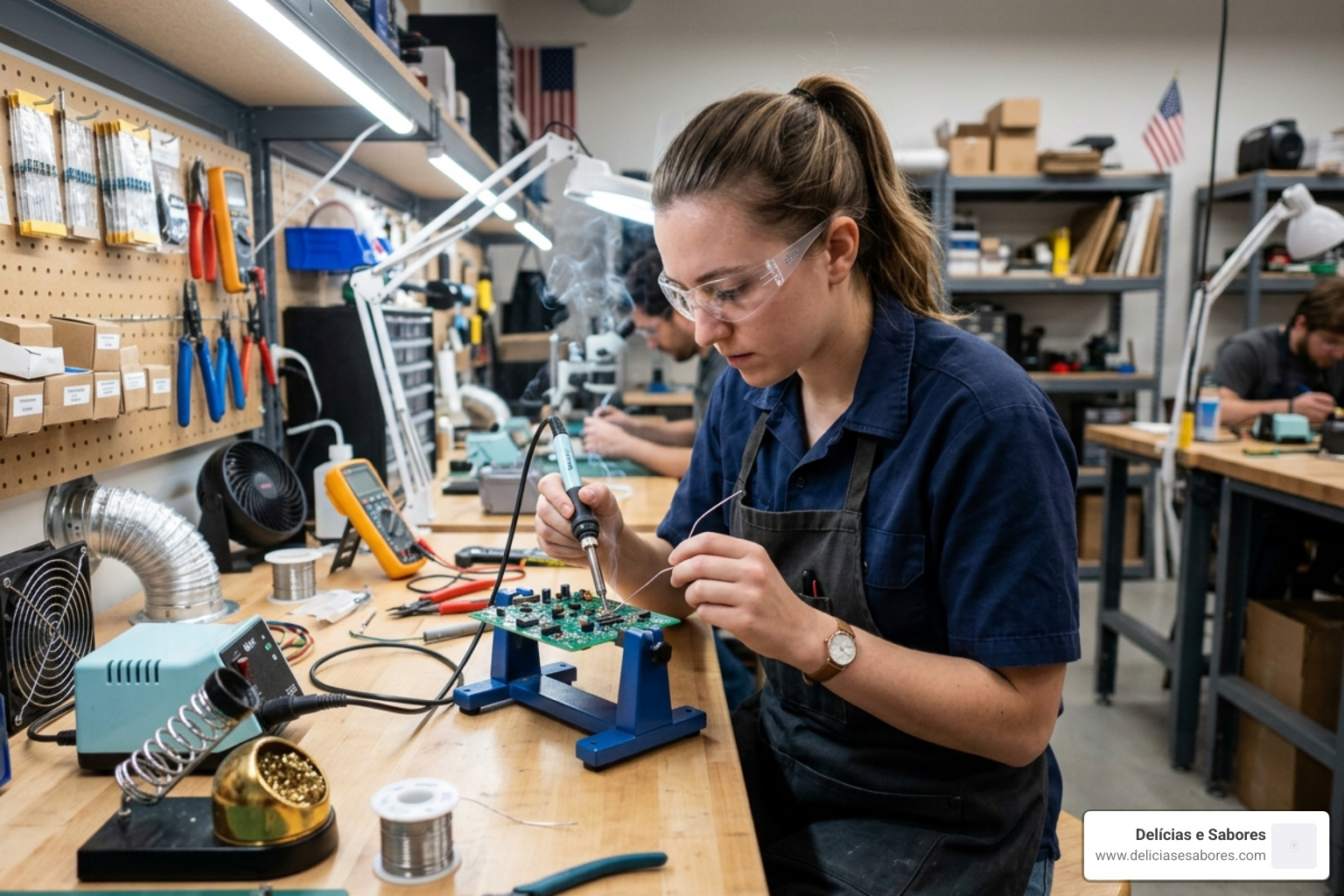
- Eye Protection: Solder can occasionally “spit,” and component leads can fly across the room when snipped. Always wear safety glasses.
- Fume Extraction: Melting flux produces smoke. Work in a well-ventilated room or use a small fume extractor fan.
- The Silicone Mat: A heat-resistant silicone mat protects your workspace from accidental burns and keeps small screws from rolling away.
- Supervision: While kits are great for kids (usually recommended for ages 10+ or 14+), adult supervision is vital to manage the burn hazard.
Projects to Cut Your Teeth On
The best soldering kits for beginners include projects that actually do something. Here are a few examples of what you can expect to find:
- The WeevilEye: This is a classic through-hole kit with a very low parts count. It uses a photocell (light sensor) to make the “eyes” of a beetle-shaped board glow brighter when the room gets dark. It’s a fun, $11.25 entry point that teaches you how transistors and resistors work.
- The Jitterbug: A kinetic project that uses a tiny vibration motor. Once you finish soldering the LEDs and switch, the bug actually skitters across the table.
- Comprehensive Workshops: Some deluxe options, like the Soldering Workshop – HackerBoxes, offer over 450 soldering points across four different projects. This takes you from basic through-hole work all the way to SMT (Surface Mount Technology), where components are soldered directly onto the surface of the board.
Frequently Asked Questions about Soldering
What is the typical price range for a good starter kit?
You can find very basic practice kits like the SparkFun WeevilEye for around $11.25. These are great if you already own an iron. If you need the whole setup (iron, tools, and project), a high-quality “Deluxe” kit like the Hue Deluxe Soldering Kit or the Jitterbug Deluxe Soldering Kit usually falls between $30 and $65. For a professional-grade experience with a digital station and multiple projects, expect to spend closer to $90-$100.
How long does it take to learn basic soldering?
Most people can master a basic joint in about 15 minutes. Completing a first project usually takes 30 minutes to 1 hour. However, the real mastery comes with practice. We recommend using online tutorials and assembly manuals—most reputable kits provide these as PDFs or videos. Some kits even award “skill badges” (blinky pins you wear) once you finish, which is a great way to track your progress.
Can children use these kits safely?
Yes, but with caveats. Most manufacturers recommend an age of 14+, though some simpler kits are rated for ages 10+ with adult supervision. The primary risks are the burn hazard from the iron (which is hotter than a pizza oven) and potential exposure to lead if using leaded solder. Always ensure kids wash their hands thoroughly after soldering and wear their safety gear.
Conclusion
Choosing your first soldering kit doesn’t have to be a brain-melting experience. By focusing on a temperature-controlled iron, the right solder, and an engaging project like the Make: Soldering Starter Pack, you’re setting yourself up for a lifetime of making and repairing.
At Delícias e Sabores, we believe that understanding your tools is the first step toward true independence in property care and restoration. Whether you’re fixing a broken appliance or building a custom smart-home sensor, these skills are the “secret sauce” to a well-maintained home. Once you’ve mastered the art of the solder joint, you’ll find that electronics is no longer a “black box”—it’s a playground.
For more tips on tool maintenance, restoration skills, and property care, visit our main site. We’re here to help you explore DIY, one delicious project at a time.
