
From Crusty to Clean: The Best Solution to Remove Rust for Every Surface
Rust Is Ruining Your Metal — Here’s How to Fix It Fast
The best solution to remove rust depends on how bad the corrosion is, but for most situations, a chelation-based remover like Evapo-Rust or POR-15 delivers the best results with the least effort — no scrubbing required.
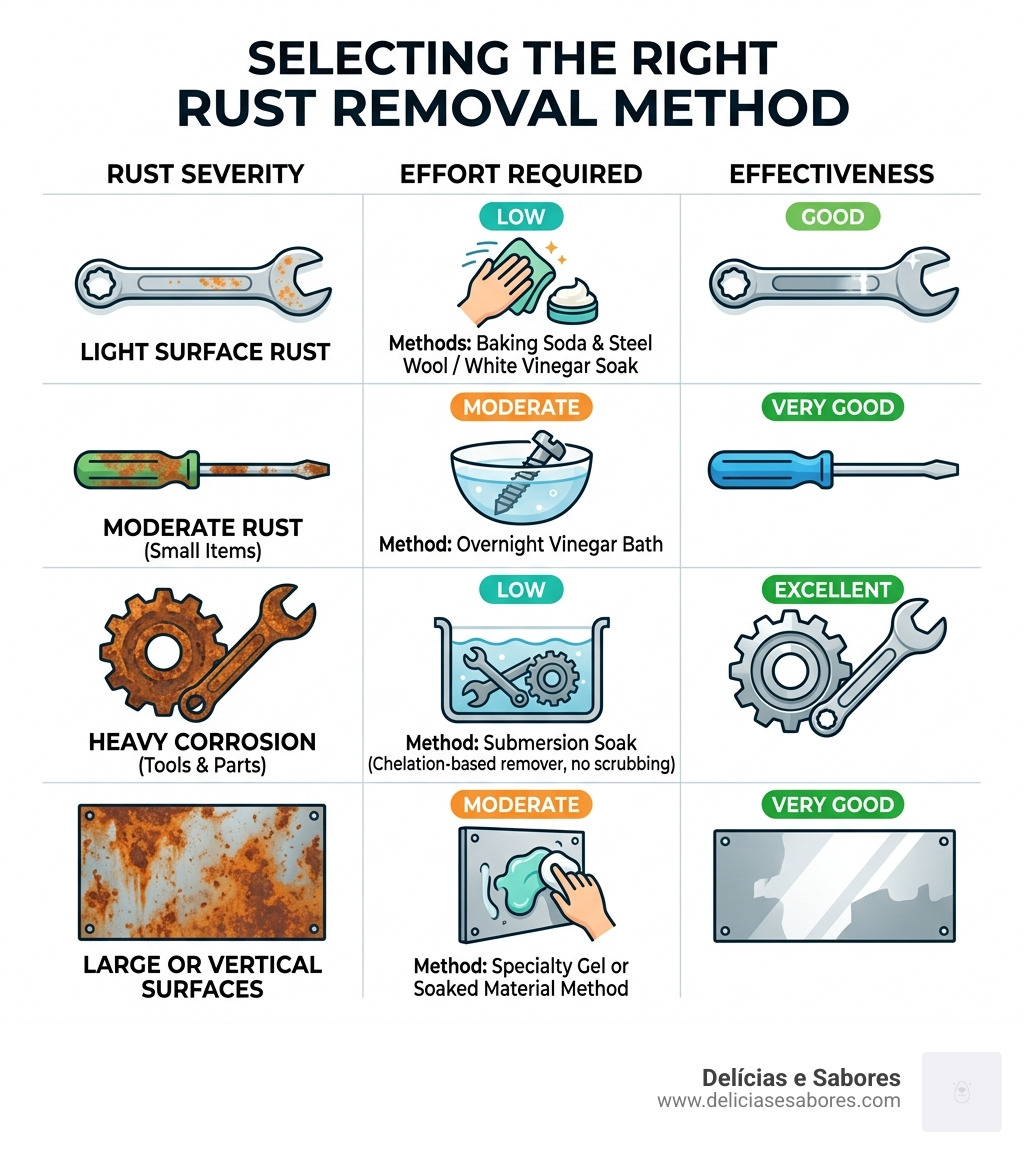
Quick answer — best rust removal methods by situation:
| Situation | Best Method |
|---|---|
| Light surface rust | Baking soda + steel wool, or white vinegar soak |
| Moderate rust on small items | Vinegar bath overnight |
| Heavy corrosion on tools or parts | Evapo-Rust or POR-15 submersion soak |
| Large or vertical surfaces | Evapo-Rust Gel or soaked paper towel method |
| Grill grates (food-safe) | Vinegar + baking powder paste |
Rust is one of those problems that sneaks up on you. One day your garden shears open fine. A few weeks later, they barely move. That’s oxidation at work — and it happens faster than most people expect.
The good news? You don’t need to throw anything away. Whether you’re dealing with a lightly spotted baking pan or a heavily corroded set of hand tools, there’s a method that works.
This guide breaks down every major rust removal approach — from pantry staples like vinegar and baking soda to professional-grade commercial soaks — so you can pick the right one and get back to work.
Understanding the Science: Why Metal Corrodes
Before we start scrubbing and soaking, we need to understand the enemy. In our work at Delícias e Sabores, we see rust as more than just an eyesore; it’s a chemical transformation. Rust, or iron oxide, forms when iron or steel is exposed to oxygen and moisture. This isn’t just a surface stain. It is the actual metal breaking down and changing its identity.
Interestingly, rust is significantly lighter than the iron it replaces. In fact, rust is about 1/17th the weight of iron. This means that even a small amount of “pure dry rust” represents a significant loss of structural metal. This is why we always emphasize early intervention.
When we talk about the best solution to remove rust, we often look at two main scientific approaches:
- Acidic Dissolution: This is how vinegar and lemon juice work. The acid reacts with the iron oxide to dissolve it. However, acids can be “blind”—they might attack the healthy metal underneath if left too long.
- Selective Chelation: This is the “smart” way to clean. Products like Evapo-Rust use a large synthetic molecule that bonds exclusively with iron from iron oxide. It leaves the sound, un-rusted steel completely untouched. This is why chelation is often considered the museum standard for preserving historic artifacts.
One phenomenon you might notice after professional-grade cleaning is “carbon migration.” This is a natural occurrence where carbon from the steel moves to the outer layer after the rust is gone, leaving a black film. Don’t worry—it’s not new rust! It’s a sign that the iron oxide has been successfully stripped away, leaving the high-carbon content of the steel exposed.
Household Remedies vs. Commercial Products: Finding the Best Solution to Remove Rust
We love a good DIY hack as much as anyone, but there is a time and place for household items versus heavy-duty chemicals. In our testing, we’ve found that the “best” method usually aligns with how much time you have and how “precious” the item is.
The Household Heavy-Hitters
- Vinegar Bath: This is the undisputed king of low-effort DIY. By submerging an item in white vinegar overnight, the acetic acid does the heavy lifting. In real-world tests, this method consistently receives a 5/5 rating for effectiveness on significant rust.
- Baking Soda Paste: If you need precision control (like cleaning a specific spot on a vintage tool without touching the handle), baking soda is the winner. It also earns a 5/5 rating because it’s safe, non-toxic, and works quickly when paired with a little elbow grease.
- Citric Acid: A milder alternative to vinegar, but be warned: it can be aggressive on certain finishes and may remove paint.
- Molasses: Believe it or not, a solution of feed-grade molasses (diluted 1:4 to 1:10 with water) is a slow but effective chelator. It’s a favorite for large-scale projects like car frames, though it can take a week or more to work.
The Commercial Champions
When household items fail, we turn to specialized liquids. POR-15 Rust Remover is a powerhouse that can derust up to 300 pounds of heavily rusted steel per gallon. These products are generally water-based, non-corrosive, and reusable until they turn completely black.
| Method | Effectiveness | Effort Level | Safety | Best For |
|---|---|---|---|---|
| Vinegar | High | Low (Soak) | High | Tools, hardware |
| Baking Soda | High | Medium (Scrub) | Very High | Kitchen items |
| Evapo-Rust | Very High | Low (Soak) | Very High | Antiques, precision parts |
| POR-15 | Very High | Low (Soak) | High | Automotive, heavy gear |
| Lemon/Salt | Medium | Medium | Very High | Light stains, knives |
Best Solution to Remove Rust for Light Surface Stains
For those “oops, I left the shears in the rain” moments, you don’t need a 5-gallon bucket of chemicals.
The Baking Soda Method This is our favorite for items that need a gentle touch. Simply dampen the metal, dust it with baking soda, and let it sit for about an hour. Use a piece of steel wool or a scouring pad to rub the paste away. Because you’re in control of the scrubbing, you won’t damage the surrounding areas.
The Potato and Dish Soap Trick It sounds like a kitchen myth, but it works! Potatoes contain oxalic acid. If you cut a potato in half, dip the flat end in dish soap (or baking soda), and rub it over a rusty baking pan, the rust will begin to lift. It’s a bit slippery and messy, but it’s a great food-safe option.
The “ChrisFix” Special A popular DIY technique involves using vinegar and even ketchup (which contains vinegar and citric acid). While it’s accessible, we find this best for very light surface rust where you don’t mind a bit of a sticky cleanup.
A Note on Flash Rust Whenever you use an acid-based cleaner (like vinegar or lemon), you strip the metal bare. If you don’t dry it immediately and apply a protectant, “flash rust” will form within minutes. Always pat dry and apply a light coat of oil or a protectant once you’re finished.
Best Solution to Remove Rust for Heavy Corrosion
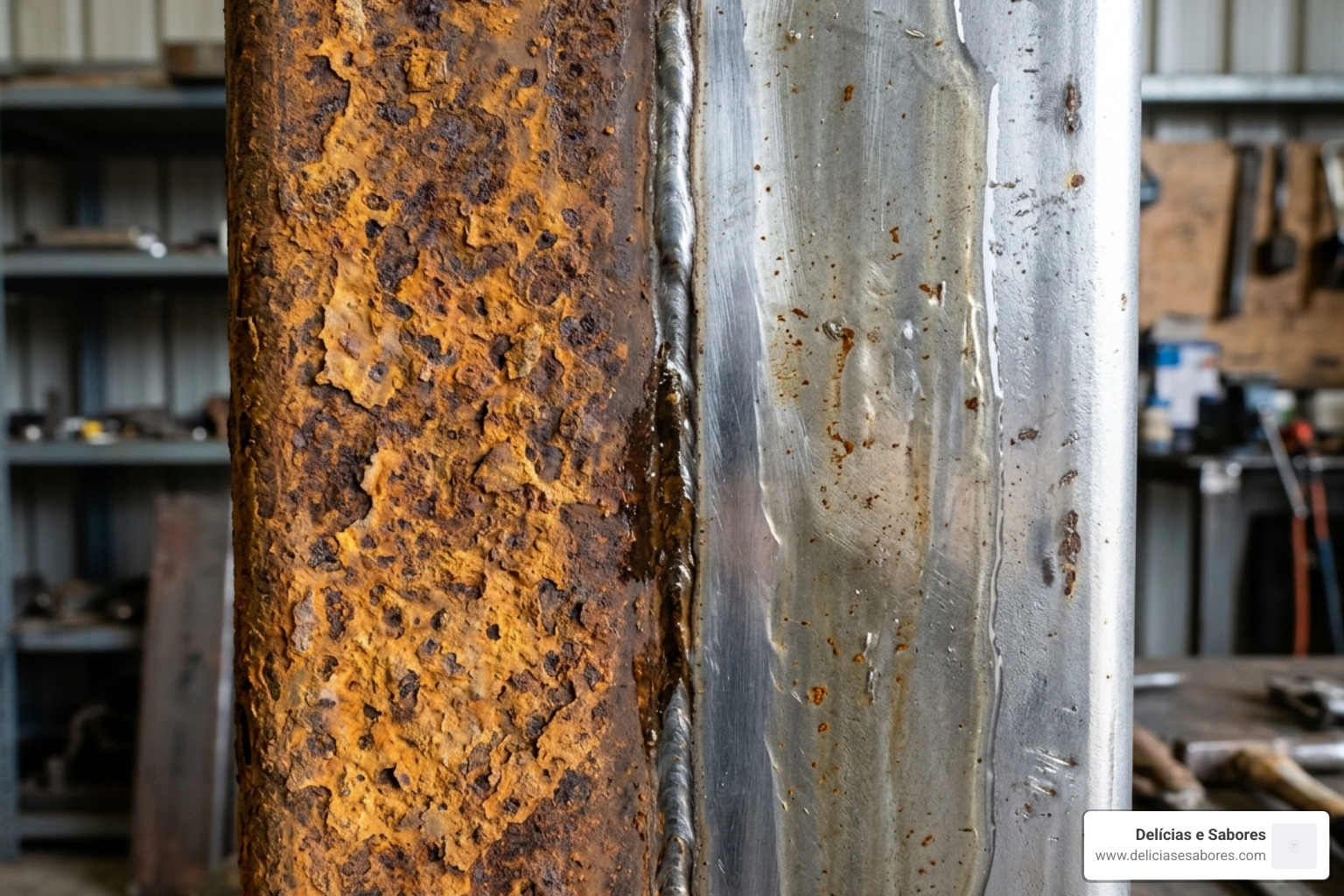
When the metal is “crusty”—meaning the rust has depth and texture—you need to move beyond scrubbing. This is where selective chelation shines.
We recommend Evapo-Rust for these heavy-duty jobs. One gallon of this solution can remove roughly 1/2 pound of pure dry rust. Since rust is so light, that “half-pound” actually translates to cleaning hundreds of pounds of steel.
How to tell if your solution is still working: Commercial baths are reusable, but they do have a limit. You can track the “specific gravity” of the liquid. A fresh bath of Evapo-Rust has a specific gravity of 1.042. Once it reaches 1.085 and turns jet black, the chelating agents are spent, and it’s time for a fresh batch.
Step-by-Step Guide to Professional Rust Removal
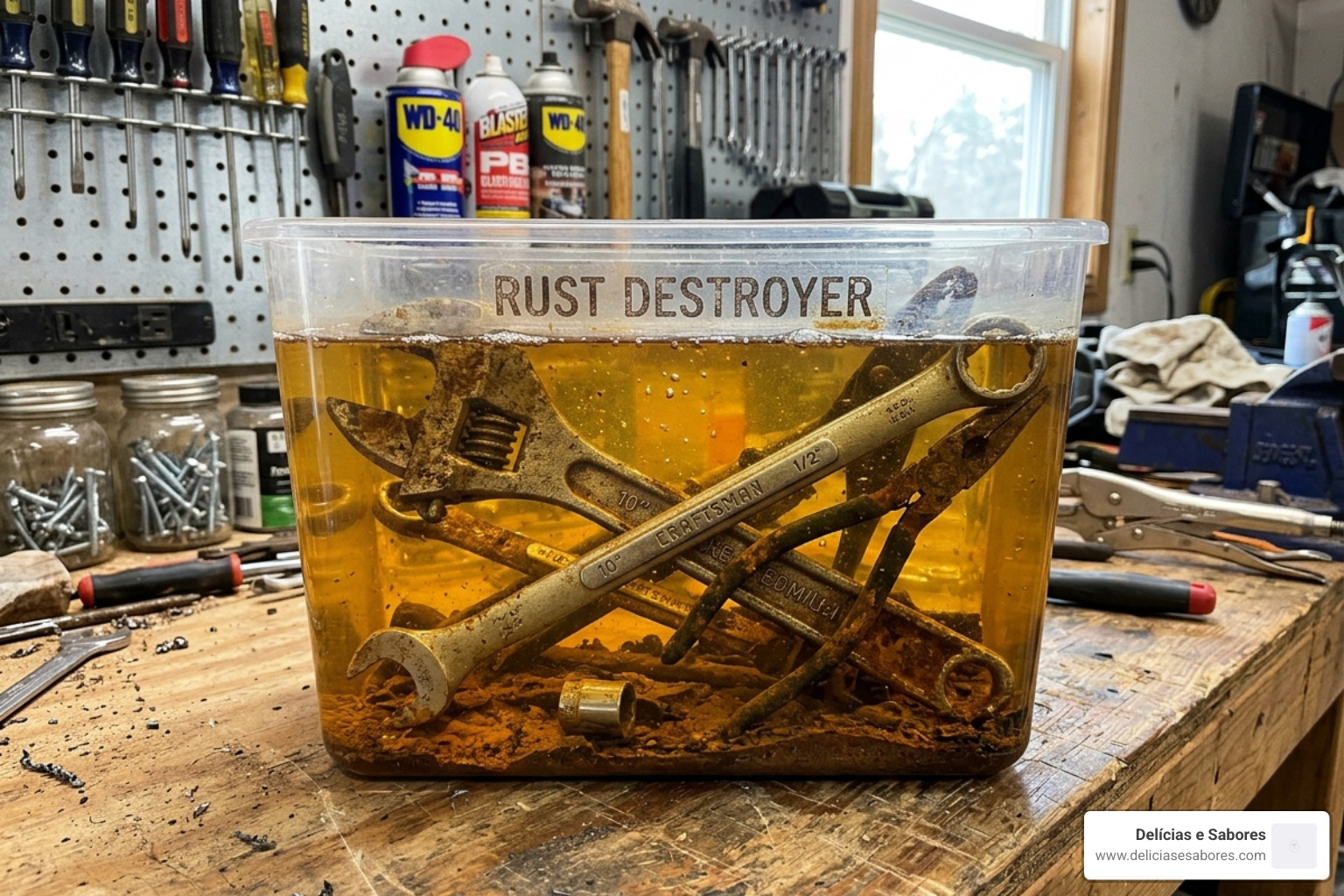
At Delícias e Sabores, we follow a specific protocol to ensure the metal is restored without being damaged. Here is how you can achieve professional results at home.
Step 1: Degrease
Rust removers work best when they can touch the rust directly. If your tool is covered in oil, grease, or “cosmoline” (that sticky shipping wax), the solution can’t get through. Use a high-quality degreaser or even just warm soapy water to clean the item first.
Step 2: Submersion
Place your item in a plastic container and pour in the POR-15 Rust Remover or Evapo-Rust until the item is completely covered.
- Light rust: 20–30 minutes.
- Heavy rust: Overnight (12–24 hours).
Step 3: The “Check-In”
If you’re using a chelation-based product, you can’t “over-soak” it. It won’t eat the good metal. However, for high-carbon steel, a shorter soak is better to minimize that black carbon film we mentioned earlier.
Step 4: Rinse and Buff
Once the rust is gone, rinse the item thoroughly with water. This removes the tiny iron molecules that could cause re-rusting. If you see a dark film, use a dry cloth or a soft brush to buff it away.
Step 5: Protect
This is the most important step! Once the metal is clean and dry, it is highly vulnerable. We recommend applying a rust inhibitor or a light spray of WD-40 immediately. For long-term protection, products like Rust-Block can keep items rust-free for up to a year.
Handling Large Items and Preventing Future Oxidation
What happens if you have rust on a vertical surface, like a drill press or a car door, that you can’t just throw into a bucket? We have a few “pro secrets” for that.
The Paper Towel Method Soak a thick paper towel in your rust removal liquid and “plaster” it onto the rusty surface. To keep the water from evaporating, cover the wet paper towel with plastic wrap and tape the edges. This keeps the chemical in contact with the rust for hours, effectively “soaking” a vertical surface.
Gel Formulas Many brands now offer gel versions of their rust removers. These are designed to cling to vertical surfaces without dripping. They are perfect for large equipment or stationary machinery.
Prevention: Stopping the Cycle
At Delícias e Sabores, we believe the best solution to remove rust is to never let it form in the first place.
- Sacrificial Anodes: In items like water heaters, a “sacrificial anode rod” (usually made of magnesium or aluminum) is designed to rust so the tank doesn’t. If you replace this rod every few years, your water heater can last decades.
- Furnace Maintenance: Did you know rust flakes in your furnace can lead to “puff-backs”? These are small explosions of soot into your home. Annual cleaning and inspection of your heating system can prevent moisture buildup and subsequent rusting of the burner chamber.
- Humidity Control: If you store tools in a garage, a simple dehumidifier can do more for rust prevention than any chemical spray.
- Painting and Sealing: For outdoor items, a high-quality paint or a clear coat is the ultimate barrier against oxygen and moisture.
Frequently Asked Questions about Rust Removal
Is rust removal safe for all metals?
Not necessarily. While most commercial removers are safe for steel and iron, they are not recommended for magnesium or magnesium alloys. However, they generally won’t harm brass, copper, aluminum, plastic, or rubber. Most are pH neutral and non-corrosive, making them much safer to handle than old-school battery acid or harsh lye-based cleaners.
How do chelation-based removers differ from acids?
Think of acids as a “sledgehammer”—they smash through everything. They dissolve rust, but they also eat into the healthy metal and can ruin paint or chrome. Chelation is like a “magnet”—it specifically targets the iron atoms that have bonded with oxygen (rust) and pulls them away, leaving the un-bonded iron atoms (the solid metal) alone. This makes chelation non-toxic, fume-free, and much safer for delicate antiques.
Can I remove rust from items that can’t be submerged?
Yes! As mentioned, the paper towel and plastic wrap method is a lifesaver. For internal systems, like an engine’s cooling system, you can actually flush the radiator with a rust remover, run the engine to circulate it, and then drain it. This clears out internal corrosion that you could never reach with a brush.
Conclusion
Restoring a piece of history or simply saving a favorite garden tool is incredibly satisfying. Whether you choose the kitchen-pantry route with vinegar and baking soda or the professional-grade power of chelation, the best solution to remove rust is the one that fits your project’s scale and your tool’s value.
At Delícias e Sabores, we are dedicated to helping you maintain your property with the same care and “flavor” we bring to everything we do. From restoration to routine maintenance, we believe every item deserves a second chance at being “deliciously” clean and functional.
Ready to tackle more home projects? More info about restoration services is just a click away. Don’t let a little oxidation stand in your way—grab a soak, a scrub, or a gel, and get to work!
