
The Best Ways to Remove Oxidation from Brass and Bronze
Why Brass Oxidation Removal Matters for Your Home
Brass oxidation removal is the process of cleaning tarnish, discoloration, and green corrosion from brass surfaces to restore their original shine.
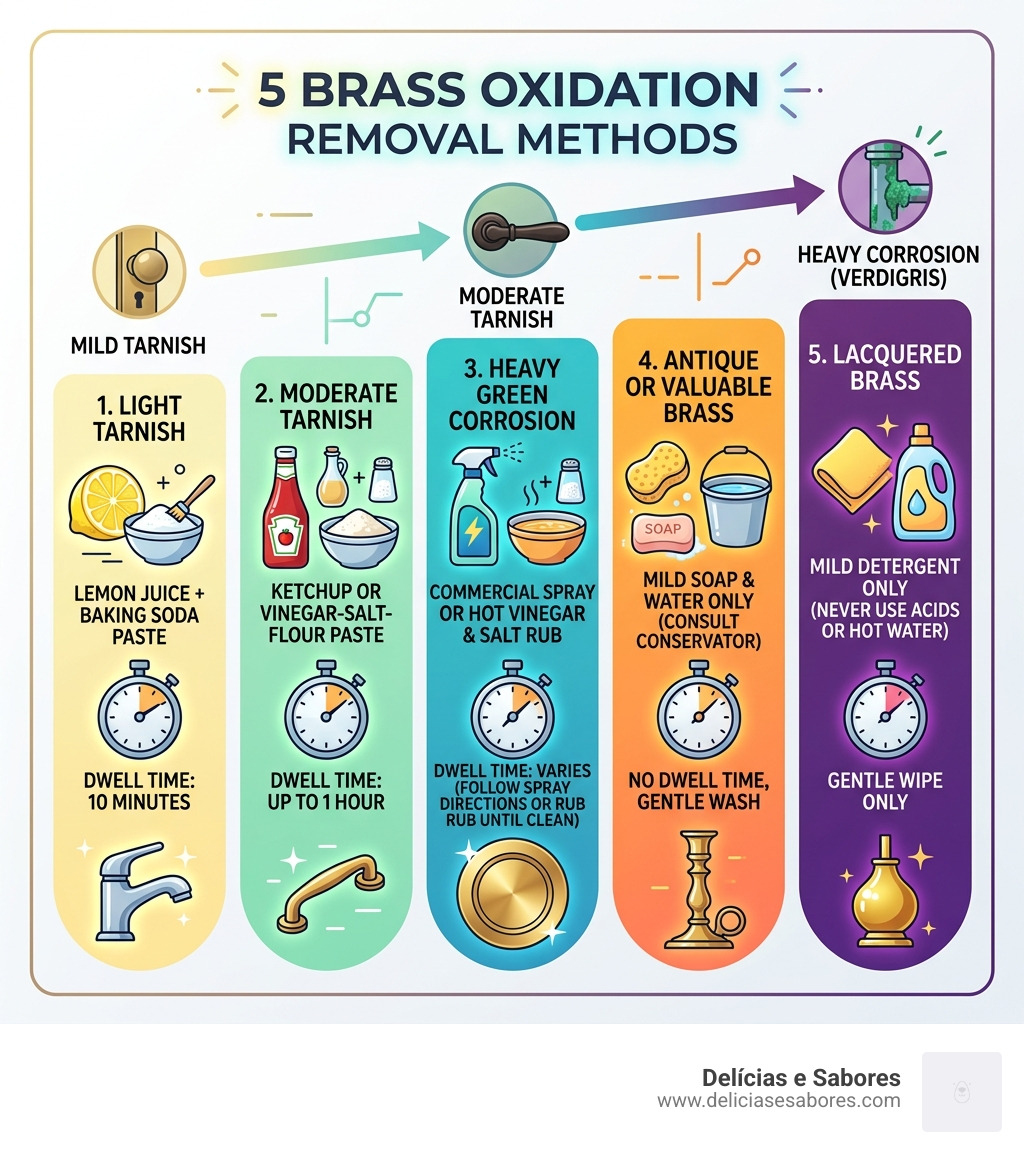
Quick answer — the most effective methods:
- Light tarnish: Apply a paste of lemon juice and baking soda, wait 10 minutes, rinse and dry
- Moderate tarnish: Use ketchup or a vinegar-salt-flour paste, leave for up to 1 hour, then rinse
- Heavy green corrosion (verdigris): Use a commercial spray like Flitz, or a hot vinegar and salt rub, followed by thorough rinsing
- Antique or valuable brass: Use only mild soap and water — consult a professional conservator before doing anything else
- Lacquered brass: Clean with mild detergent only — never use acidic cleaners or hot water
Important: Always test any method on a small, hidden area first. Never use these methods on brass-plated or lacquered surfaces without checking first.
Brass is beautiful. Doorknobs, faucets, cabinet handles, light fixtures — when brass is polished and gleaming, it elevates an entire room.
But brass doesn’t stay that way on its own.
Exposed to air, humidity, and everyday pollutants, brass naturally tarnishes. Its copper content reacts with oxygen to form dull copper oxides. Over time, moisture and sulfur compounds in the air push that reaction further — producing the green buildup known as verdigris. This is not rust (that’s an iron thing), but it can look just as bad.
The good news? Most brass oxidation is completely reversible using things you already have at home.
The tricky part is knowing which method to use — because the wrong approach can scratch the surface, strip a protective lacquer coating, or even destroy the value of an antique piece. One well-known cautionary example from the collector community: a woman cleaned a toned coin worth $2,500 using the wrong method, and its value dropped to just $25.
This guide covers everything — from quick DIY fixes to professional-grade restoration — so you can clean your brass the right way, the first time.
Identifying Your Metal Before Cleaning
Before we dive into the scrub brushes and lemon juice, we need to perform a little detective work. Brass isn’t always what it seems. Many modern items are actually steel or zinc with a thin “skin” of brass plating. Others are solid brass but protected by a clear lacquer. Treating plated steel with a heavy-duty acid meant for solid brass can ruin the piece in seconds.
The Magnet Test
This is the gold standard for brass oxidation removal preparation. Grab a refrigerator magnet and touch it to the object.
- If the magnet sticks: You are dealing with brass-plated steel. You must be extremely gentle. Harsh scrubbing or strong acids will eat right through that thin layer of brass, revealing the dull silver steel underneath.
- If the magnet does NOT stick: You likely have solid brass (or a non-magnetic alloy like zinc). Solid brass can handle more rigorous cleaning and polishing.
The Acetone and Visual Test
Next, we check for lacquer. Many manufacturers apply a clear protective coating to prevent oxidation.
- Lacquered Brass: If the item looks shiny but has “cracks” in the shine or dark spots that look like they are under a clear film, it’s lacquered. You can also test a hidden spot with a cotton swab dipped in acetone (nail polish remover). If the finish becomes sticky, it’s lacquer.
- Unlacquered (Raw) Brass: This metal feels “warmer” to the touch and develops an even, dull patina over time.
| Feature | Solid Brass | Brass-Plated | Lacquered Brass |
|---|---|---|---|
| Magnet Test | Does not stick | Sticks firmly | Depends on base metal |
| Durability | High; can be polished often | Low; plating can wear off | High, until lacquer fails |
| Typical Lifespan | Generations | 5–15 years | ~10 years before yellowing |
| Best Cleaner | Mild acids or polish | Mild soap and water only | Mild soap and water only |

Effective Brass Oxidation Removal Methods
Once you know your metal is solid and unlacquered, you can choose your “flavor” of cleaning. The goal of brass oxidation removal is to break down the copper and zinc oxides without pitting the metal.
For light soils, we often start with isopropyl alcohol (rubbing alcohol). Using the sponge side of a light-duty “white-padded” scrubbing sponge, you can wipe with the grain of the metal to remove oils and light grime. For tougher scuffs, flipping to the white scrub pad side can provide just enough agitation to clear the surface.
If you are dealing with verdigris (that crusty green stuff) or thick sulfate crusts, you’ll need something more reactive. Commercial products like Flitz are excellent because they use salt-based, non-acidic formulas that are safer for the user while still dissolving heavy tarnish, water spots, and even calcium deposits without the need for endless scrubbing.
DIY Brass Oxidation Removal with Kitchen Staples
At Delícias e Sabores, we love a good “kitchen recipe” for home care. Here are the most effective ways to use your pantry for brass oxidation removal:
- The Ketchup Method: It sounds weird, but it works! The natural acidity in tomatoes and vinegar dissolves tarnish effortlessly. Simply coat the item in ketchup and let it sit for 20 minutes (or up to an hour for heavy tarnish). Rinse with warm water and dry. It’s so effective it might make you look at your fries differently!
- Lemon and Salt: Cut a lemon in half, sprinkle a generous amount of table salt on the cut side, and rub it directly onto the brass. The salt acts as a mild abrasive while the citric acid eats the oxidation.
- The “Power Paste” (Vinegar, Flour, and Salt): Mix equal parts of these three ingredients to create a thick paste. The flour binds the acid to the metal, and the salt provides scrubbing power. Apply it, wait 30 to 60 minutes, then scrub gently with a soft toothbrush and rinse.
- Baking Soda and Lemon Juice: This is the “impatient person’s” method. Mix them into a fizzy paste, apply, wait 10 minutes, and rinse. It’s quick and provides a beautiful immediate shine.
- Yogurt: Similar to ketchup, the lactic acid in yogurt (or sour milk) acts as a gentle tarnish remover. Spread it on, wait 10 minutes, and rinse.
Professional Brass Oxidation Removal for Antiques
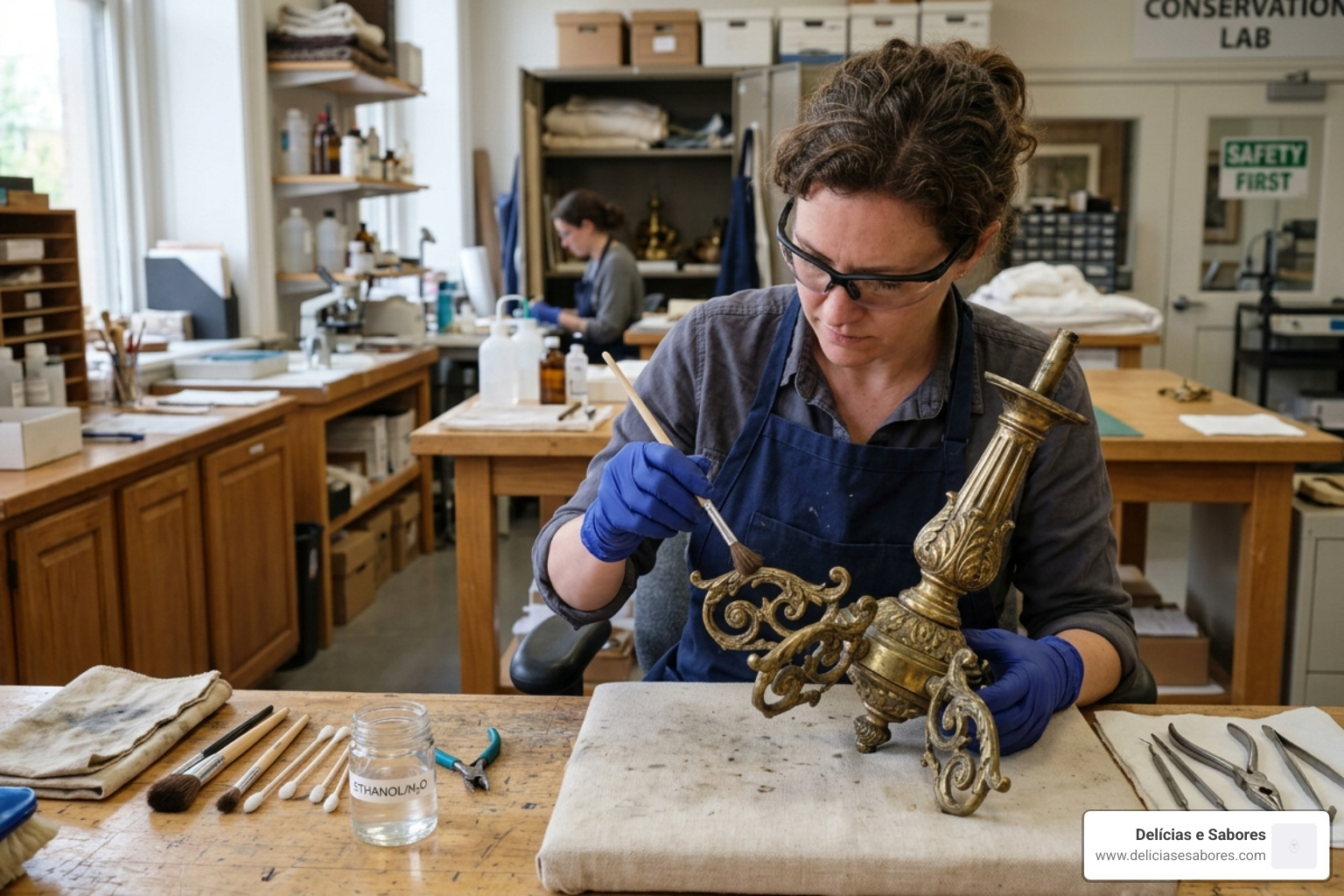
When dealing with a 100-year-old heirloom or a valuable bronze statue, the rules change. In Removing Patina or Tarnish from Solid Brass, “less is more.”
A professional conservator will often recommend preserving the patina rather than stripping it. Patina—the mellow, dark coloring that comes with age—actually protects the underlying metal from deeper corrosion. If you must clean an antique, start with the absolute mildest solution: a few drops of dish soap in lukewarm water.
For heavy buildup on valuables, professionals might use a paste of whiting (calcium carbonate) and boiled linseed oil. This removes grime while leaving the “glow” of the antique intact. If an item is pitted, cracked, or extremely fragile, stop immediately and consult a museum expert.
Step-by-Step Guide for Restoring Corroded Brass
If you have a set of heavily tarnished door handles or a crusty bathroom faucet, follow this professional protocol for brass oxidation removal.
- Preparation and Safety: Work in a well-ventilated area. Wear rubber gloves to protect your skin from acids and to prevent your own finger oils from re-tarnishing the fresh metal. Protect surrounding surfaces (like wood or stone) with plastic film or masking tape.
- Surface Examination: Check for deep pitting. If the metal is physically “eaten” into, polishing will help the shine but won’t fill the holes.
- The Pre-Clean: Wash the item in hot, soapy water to remove grease and dust. If the item is greasy, wipe it down with isopropyl alcohol first.
- Applying the Agent: Whether using a DIY paste or a commercial cleaner, apply it with a soft cloth. Always work with the grain of the metal.
- Detail Work: Use a soft-bristled toothbrush or an orangewood stick to get into crevices, engravings, and corners where green verdigris likes to hide. For very stubborn green crusts, a dry brass wire brush can be used, but only with extremely light pressure to avoid scratching.
- The Rinsing Protocol: This is the most skipped step. You must remove every trace of acid (vinegar, lemon, or chemical). Rinse thoroughly with clean, clear water. Any leftover acid will cause the brass to turn black or re-oxidize within hours.
- Drying and Buffing: Use a fresh microfiber cloth to dry the item completely. Once dry, use a “yellow” treated dust cloth or a clean cotton rag to buff the surface rapidly. This “burnishing” action creates friction and heat, which helps harden the surface and creates a brilliant luster.
How to Prevent Re-Oxidation and Maintain Shine
You’ve done the hard work of brass oxidation removal; now you need to “lock in” that shine. Raw brass begins to oxidize the second it touches the air.
- The Chemical Barrier: Apply a thin layer of microcrystalline wax (like Renaissance Wax) or a high-quality carnauba wax. This creates a physical shield between the metal and oxygen.
- The Olive Oil Trick: For unlacquered brass items that you touch frequently, rubbing them with a cloth moistened with a tiny bit of olive oil after polishing can retard tarnish for weeks.
- Liquid Ammonia: For items that need to stay “bright” (like musical instruments), a weekly wipe with a cloth dampened with a little liquid ammonia can keep the shine fresh. Warning: Never mix ammonia with bleach.
- Humidity Control: Brass tarnishes faster in damp environments. If you are storing brass heirlooms, keep them in a cool, dry place with silica gel packets to absorb moisture.
- Professional Lacquering: If you want a “set it and forget it” solution, you can apply a clear spray lacquer. However, this is difficult to do well at home without getting “runs” or bubbles. A good lacquer job usually lasts about 10 years before it needs to be stripped and reapplied.
Frequently Asked Questions about Brass Cleaning
Can I use ketchup to clean oxidized brass?
Yes! As we mentioned earlier, ketchup is one of the best household tools for brass oxidation removal. Its acidity (from tomatoes and vinegar) is high enough to dissolve tarnish but mild enough not to damage solid brass. Just ensure you rinse it off completely, or the sugar in the ketchup could leave a sticky residue that attracts more dirt.
How do I remove green corrosion (verdigris) safely?
Green corrosion, or verdigris, is a more advanced form of oxidation. To remove it safely, use a paste of flour, salt, and hot vinegar. For very thick crusts, you may need a specialized product or a 10% ammonia-water solution soak. Always use a soft brush to agitate the crusts—never use steel wool, as it will leave tiny shards of iron that will cause the brass to rust (a process called galvanic corrosion).
What is the best way to clean lacquered brass?
Lacquered brass should only be cleaned with mild dish soap and lukewarm water. Never use hot water, as it can cause the lacquer to peel or turn cloudy. If the brass underneath the lacquer is tarnishing, it means the coating has failed. You will need to strip the old lacquer using acetone or a commercial paint stripper before you can perform any brass oxidation removal on the metal itself.
Conclusion
Restoring the golden glow of your home’s hardware doesn’t require a professional degree—just a bit of patience and the right kitchen staples. Whether you’re using the “delicious” acidity of ketchup or the precision of a commercial polish, the key to successful brass oxidation removal is identifying your metal first and finishing with a protective barrier.
At Delícias e Sabores, we believe that a well-cared-for home is the foundation for a life well-lived. If your property needs more than just a quick polish, we offer comprehensive restoration, tools, and cleaning services to keep every corner of your world shining. From hardware upgrades to deep maintenance, we bring a “flavorful” touch to property care.
Ready to take your home restoration to the next level? More info about our restoration services is just a click away. Let’s make your home as bright and inviting as a fresh summer morning!
